
The Smartphone Operating System Wars
Underneath the hardware design and camera specifications that dominate most smartphone marketing sits a quieter but equally consequential battle: the competition between the software platforms that power these devices. The operating system a phone runs shapes nearly everything about how it is used, from the apps available to how data is handled to which company ultimately profits most from each device sold. The story of how this competition unfolded, and largely settled into its current form, reveals a great deal about how platform competition works in the technology industry more broadly.
Early Fragmentation
In the years before the smartphone era fully took hold, the mobile operating system landscape was considerably more fragmented than it is today. BlackBerry OS dominated the corporate and government market, prized for its security and physical keyboard-driven email efficiency. Symbian, used primarily by Nokia, held the largest global market share for much of the 2000s, reflecting Nokia’s dominant position in overall handset sales during that period. Windows Mobile offered another option aimed largely at business users, while Palm OS maintained a smaller but loyal following among earlier smartphone adopters.
This fragmented landscape began to collapse rapidly following the 2007 launch of the iPhone and the 2008 launch of the first Android device, both of which offered software experiences, particularly around touchscreen interaction and later app ecosystems, that made the existing platforms feel outdated by comparison within just a few years.
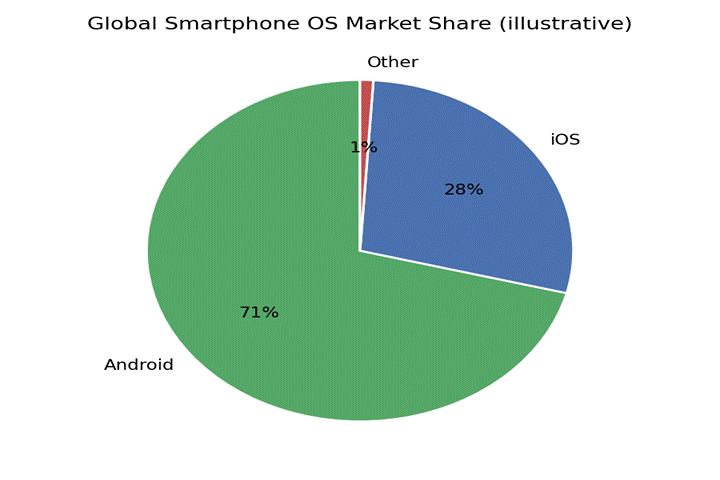
Figure 2: Illustrative global smartphone operating system market share, showing the dominance of Android and iOS.
The Rise of the App Store Model
A pivotal moment in the operating system competition came with the introduction of centralized app stores, first with Apple’s App Store in 2008 and Google’s equivalent, now known as the Google Play Store, shortly afterward. These platforms allowed independent developers to build and distribute software directly to users, creating a powerful network effect: more available apps made a platform more attractive to consumers, which in turn made the platform more attractive to developers looking to reach the largest possible audience, reinforcing the dominance of whichever platforms could establish an early lead.
This dynamic proved extremely difficult for competing operating systems to overcome. Microsoft’s Windows Phone, launched in 2010 with generally well-regarded design, struggled for years to attract the volume of third-party apps that Android and iOS enjoyed, a shortfall that continually undermined its appeal to consumers regardless of the underlying quality of the software itself, and Microsoft eventually discontinued the platform in the late 2010s.
Android’s Open Model Versus Apple’s Closed Ecosystem
The two platforms that ultimately came to dominate the global market took markedly different approaches. Android, developed by Google and offered freely to device manufacturers, allowed a wide range of companies, including Samsung, Xiaomi, and many others, to build phones spanning nearly every price point, from budget devices sold for a fraction of flagship prices to premium phones competing directly with Apple’s offerings. This openness helped Android achieve dominant global market share, particularly in price-sensitive markets across Asia, Africa, and Latin America.
Apple’s iOS, by contrast, runs exclusively on Apple’s own hardware, allowing for tighter integration between software and hardware but limiting the platform to Apple’s own device lineup and generally higher price points. This closed approach has generally yielded higher profit margins and strong customer loyalty, particularly in wealthier markets including North America, Western Europe, and parts of East Asia, even as it has resulted in a smaller overall global market share compared to Android’s much broader device ecosystem.
Regulatory Scrutiny of App Store Practices
As both platforms matured into dominant global gatekeepers for mobile software distribution, their app store policies, particularly around mandatory commission fees on in-app purchases and restrictions on alternative app distribution methods, have drawn increasing regulatory scrutiny in multiple jurisdictions. The European Union’s Digital Markets Act, along with various antitrust cases and legislation in other countries, has pushed both Apple and Google toward allowing greater flexibility for alternative app stores and payment systems in certain markets, changes that both companies have generally resisted or implemented only in limited form, arguing that their existing policies are necessary to maintain security and quality standards across their platforms.
A Largely Settled, but Not Frozen, Landscape
While Android and iOS now account for the overwhelming majority of smartphones in use worldwide, the operating system landscape is not entirely static. Chinese manufacturers facing restrictions on Android licensing have developed alternative operating systems for certain markets, and ongoing regulatory pressure continues to shape how both dominant platforms operate, particularly around app distribution and payment processing. Still, the scale of the network effects built up over more than a decade means that any serious new challenger to Android and iOS’s duopoly would face a formidable, and arguably increasingly difficult, uphill battle.