

Mobile Phones and the Question of Screen Time
As smartphones have become nearly constant companions for billions of people, a substantial body of research and public debate has emerged around the effects of heavy mobile phone use, particularly on attention, mental health, sleep, and social relationships. The picture that has emerged from this research is considerably more nuanced than either the most alarmist warnings or the most dismissive reassurances often suggest, reflecting a technology whose effects appear to depend heavily on how, not simply how much, it is used.
How Much Time People Actually Spend
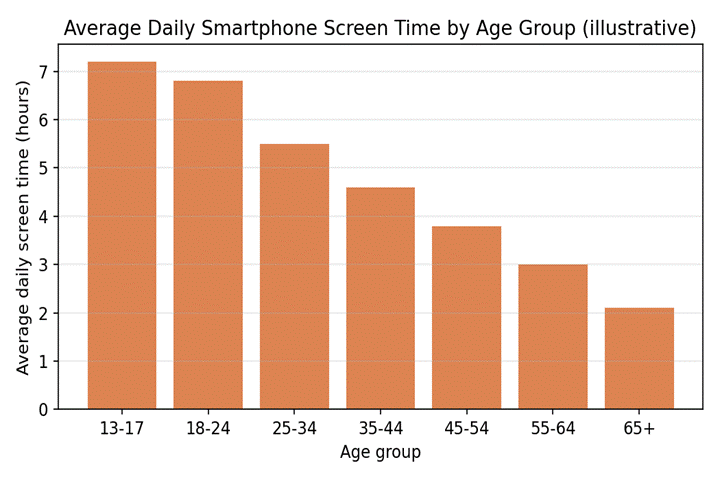
Survey and app-tracking data consistently show that smartphone use varies considerably by age, with younger users generally reporting substantially more daily screen time than older users. Teenagers and young adults in many countries report average daily smartphone screen time exceeding six or seven hours when accounting for all app categories, though these figures vary considerably depending on measurement methodology and what counts as active screen time versus simply having a screen on in the background.
Figure 3: Illustrative average daily smartphone screen time by age group, showing the general decline in usage with age.
Attention, Multitasking, and Cognitive Effects
One of the more consistently replicated findings in smartphone research concerns the effect of phone notifications and proximity on sustained attention. Multiple studies have found that the mere presence of a smartphone within reach, even when not actively being used, can measurably reduce performance on tasks requiring sustained focus, a phenomenon researchers attribute to the cognitive effort involved in actively resisting the urge to check the device. Frequent notification interruptions have similarly been linked to difficulty sustaining deep focus on demanding tasks, contributing to broader public discussion about smartphones’ role in fragmenting attention in ways that may affect work, study, and even leisure activities that benefit from sustained engagement.
Sleep and Physical Health
Smartphone use before bedtime has drawn particular research attention, both because of the stimulating content many apps are designed to deliver and because of the blue light emitted by screens, which some research suggests can interfere with the body’s natural production of melatonin, a hormone that regulates sleep. Studies examining adolescent smartphone use have generally found associations between heavy nighttime phone use and both delayed sleep onset and reduced overall sleep duration, though researchers note it can be difficult to fully separate the direct physiological effects of screen light from the simple displacement effect of time spent on a phone that would otherwise have been spent sleeping.
Mental Health: A Complicated Picture
Perhaps the most contentious area of smartphone research concerns mental health, particularly among adolescents. Some researchers, most notably social psychologist Jonathan Haidt, have argued that the rapid rise in smartphone and social media use among teenagers coincides closely with documented increases in adolescent anxiety, depression, and self-harm rates in several countries beginning in the early 2010s, and have argued for a causal relationship between the two trends. Other researchers have pushed back on strong causal claims, noting that correlational data of this kind cannot easily rule out other contributing social and economic factors occurring over the same period, and that some large-scale studies attempting to isolate the specific effect of smartphone or social media use have found only small statistical associations with mental health outcomes, considerably smaller than the effect sizes implied by the more alarmist public narrative.
What does appear to have somewhat stronger research support is that the type and context of smartphone use matters considerably more than total screen time alone. Passive social media scrolling has been associated with more negative mental health outcomes in various studies than active use, such as messaging friends directly or engaging in creative content creation, suggesting that broad screen time totals may be a less useful metric than more specific measures of how that time is actually spent.
Approaches to Healthier Use
In response to growing public concern, smartphone manufacturers have introduced built-in tools allowing users to track and limit their own usage, including app time limits, scheduled downtime, and grayscale display modes intended to make phones less visually engaging during designated hours. A number of schools and some national governments have also introduced restrictions on smartphone use during school hours, citing concerns about both academic focus and social dynamics, policies that have generated their own debate about effectiveness and enforcement.
Most researchers in this area now generally recommend an approach focused on intentional, moderated use rather than either unrestricted access or blanket prohibition, along with particular attention to protecting sleep time and in-person social interaction from displacement by phone use, reflecting a growing consensus that the smartphone itself is less the central issue than the habits and contexts surrounding its use.